AI For Students Writing

AI For Students Writing — independent reviews, comparisons, pricing and step-by-step guides on Aizhi.

  • Adobe GoLive

    Adobe GoLive

    Adobe GoLive was a WYSIWYG HTML editor and web site management application from Adobe Systems. It replaced Adobe PageMill as Adobe's primary HTML editor and was itself discontinued in favor of Dreamweaver. The last version of GoLive that Adobe released was GoLive 9. == History == GoLive originated as the flagship product of a company named GoNet Communication, Inc. then based in Menlo Park, California, and the development company GoNet Communications GmbH in Hamburg, Germany, in 1996. Later GoNet changed its name to GoLive Systems, Inc, and the name of its product to GoLive CyberStudio. Adobe acquired GoLive in 1999 and re-branded the GoLive CyberStudio product to what became Adobe GoLive. Adobe took over the Hamburg office as an Adobe development site to continue to develop the product. At the time of the acquisition, CyberStudio was a Macintosh-only application. In the spring of 1999 Adobe released Adobe GoLive for both Macintosh and Microsoft Windows. The first versions of Dreamweaver and CyberStudio were released in a similar timeframe. However, Dreamweaver eventually became the dominant WYSIWYG HTML editor in market share. After the Adobe acquisition of Macromedia (the company that had owned Dreamweaver), GoLive was progressively re-targeted toward Adobe's traditional design market, and the product became better integrated with Adobe's existing suite of design-oriented software products and less focused on the professional web development market. The Adobe CS2 Premium suite contained GoLive CS2. With the release of Creative Suite 3, Adobe integrated Dreamweaver as a replacement for GoLive and released GoLive 9 as a standalone product. In April 2008, Adobe announced that sales and development of GoLive would cease in favor of Dreamweaver. == General description and distinctive aspects == GoLive incorporated a largely modeless workflow that relied heavily on drag-and-drop. Most user interaction was done via a contextual inspector rather than the modal workflow found in Dreamweaver. Among its features were a separate editor for tables that supported nesting, and a two-dimensional panel for applying CSS styles to elements. GoLive supported drag-and-drop of native Adobe Photoshop and Adobe Illustrator files via what the company called "Smart Objects", which then automatically guided the user through saving those files in web-supported formats. Updates to the original Photoshop or Illustrator assets were automatically tracked by GoLive. It also implemented a tool called "Components" which allowed updates to interface elements throughout a site to be updated globally by changing one single file. As a website management tool, GoLive allowed users to transfer and publish content directly from within the application, and allowed individual files to be excluded from uploading. == Features == One of the new features of GoLive version 5 was Dynamic Link, which was a method of creating dynamic, database-driven web content without the need to know a server-side language and with full WYSIWYG support in the GoLive user interface. GoLive had a powerful set of extensibility API which could be used to add additional functionality to the product. The GoLive SDK provided interfaces which allowed developers to use a combination of XML, JavaScript and C/C++ to create plugins for the product. The extensibility API allowed developers access to custom drawing and event handling using JavaScript, as well as a full JavaScript debugger and command line interpreter. This allowed intermediate-level developers using interpreted JavaScript to create sophisticated user interfaces. == Language and framework structure == Adobe GoLive is coded in the C++ programming language. It uses a custom C++ framework called SCL (Simple Class Library) which was initially built from scratch by the engineers at GoLive Systems Inc. The SCL framework was also used in the short-lived Adobe Atmosphere 3D software. == Release history == As the final version, GoLive 9 was discontinued in April 2008.

    Read more →
  • John Schulman

    John Schulman

    John Schulman (born 1987 or 1988) is an American artificial intelligence researcher and co-founder of OpenAI. In August 2024, he announced he would be joining Anthropic. In February 2025, he announced he was leaving to join Thinking Machines Lab, where he is chief scientist. == Early life and education == Schulman had an interest in science and math from a young age. He enjoyed science fiction, especially the work of Isaac Asimov. When he was in seventh grade, he became deeply interested in the television program BattleBots, which featured combat between remote-controlled robots. In what he said was his first self-directed study, he read extensively in subject areas that would help him design a superior robot, but the robot he and his friends worked on was never built. He attended Great Neck South High School. He was a member of the US Physics olympiad Team in 2005. In 2010, he graduated from Caltech with a degree in physics. He has a PhD in electrical engineering and computer sciences from the University of California, Berkeley, where he was advised by Pieter Abbeel. == Career == In December 2015, shortly before finishing his PhD, Schulman co-founded OpenAI with Sam Altman, Elon Musk, Ilya Sutskever, Greg Brockman, Trevor Blackwell, Vicki Cheung, Andrej Karpathy, Durk Kingma, Pamela Vagata, and Wojciech Zaremba, with Sam Altman and Elon Musk as the co-chairs. There, he led the reinforcement learning team that created ChatGPT. He has been referred to as the "architect" of ChatGPT. In August 2024, Schulman announced he would be joining Anthropic. He stated his move was to allow him to deepen his focus on AI alignment and return to more hands-on technical work. In February 2025, he announced he was leaving to join Thinking Machines Lab, where he is chief scientist. == Awards and honors == In 2025, Schulman received the Mark Bingham Award for Excellence in Achievement by Young Alumni from his alma mater, UC Berkeley.

    Read more →
  • Writesonic

    Writesonic

    Writesonic is an AI visibility and generative engine optimization (GEO) platform used by enterprises, digital agencies, direct-to-consumer (D2C) companies, and fast-growing brands to understand and improve how they are represented in AI-generated search and answer systems. The platform analyzes how brands appear in AI answers, compares their visibility and citations against competitors, and provides tools to create and optimize on-site content and secure mentions across third-party sources, discussion forums, and user-generated platforms that influence AI outputs. == History == Writesonic was founded by Samanyou Garg in October 2020 in San Francisco, California. The company initially operated as Magicflow before adopting its current name. In its seed round, the company raised $2.5 million from investors including Y-Combinator, HOF Capital, and Soma Capital. The company began with AI-powered content generation tools. In 2023, it expanded into AI-enhanced search engine optimization. In 2024, the company launched an AI agent specifically designed for SEO tasks, with integrations to platforms including Ahrefs, Google Keyword Planner, Keywords Everywhere, and Google Search Console. This was among the first specialized AI agents developed for SEO automation. Around the same time, Writesonic expanded its product line into Generative engine optimization (GEO), developing tools to analyze and improve how brands are represented in AI-generated search and answer environments. However, it is currently being challenged in the market with competitors such as Profound (known for their dashboards) and Meridian (known for their execution). == Technology and features == In 2024, the company introduced an artificial intelligence agent designed to automate search engine optimization (SEO) tasks. The agent integrates with platforms such as Ahrefs, Google Keyword Planner, Keywords Everywhere, and Google Search Console to conduct technical audits, perform keyword research, carry out competitive analysis, and assist in strategy development. It is capable of identifying content gaps, suggesting optimization measures, and generating SEO strategies using real-time data from the integrated platforms. The platform also includes features for content strategy, optimization, and management. It makes use of large language models such as GPT-5, Claude Opus 4.1, and Claude Sonnet 4.5, in combination with proprietary workflows for fact-checking, internal linking, and content structure optimization.

    Read more →
  • Simultaneous localization and mapping

    Simultaneous localization and mapping

    Simultaneous localization and mapping (SLAM) is a process where a computer constructs or updates a map of an unknown environment while simultaneously keeping track of an entity's location within it. While this initially appears to be a chicken or the egg problem, there are several algorithms known to solve it in, at least approximately, tractable time for certain environments. Popular approximate solution methods include the particle filter, extended Kalman filter, covariance intersection, and GraphSLAM. SLAM algorithms are based on concepts in computational geometry and computer vision, and are used in robot navigation, robotic mapping and odometry for virtual reality or augmented reality. SLAM algorithms are tailored to the available resources and are not aimed at perfection but at operational compliance. Published approaches are employed in self-driving cars, unmanned aerial vehicles, autonomous underwater vehicles, planetary rovers, newer domestic robots and even inside the human body. == Mathematical description of the problem == Given a series of controls u t {\displaystyle u_{t}} and sensor observations o t {\displaystyle o_{t}} over discrete time steps t {\displaystyle t} , the SLAM problem is to compute an estimate of the agent's state x t {\displaystyle x_{t}} and a map of the environment m t {\displaystyle m_{t}} . All quantities are usually probabilistic, so the objective is to compute P ( m t + 1 , x t + 1 | o 1 : t + 1 , u 1 : t ) {\displaystyle P(m_{t+1},x_{t+1}|o_{1:t+1},u_{1:t})} Applying Bayes' rule gives a framework for sequentially updating the location posteriors, given a map and a transition function P ( x t | x t − 1 ) {\displaystyle P(x_{t}|x_{t-1})} , P ( x t | o 1 : t , u 1 : t , m t ) = ∑ m t − 1 P ( o t | x t , m t , u 1 : t ) ∑ x t − 1 P ( x t | x t − 1 ) P ( x t − 1 | m t , o 1 : t − 1 , u 1 : t ) / Z {\displaystyle P(x_{t}|o_{1:t},u_{1:t},m_{t})=\sum _{m_{t-1}}P(o_{t}|x_{t},m_{t},u_{1:t})\sum _{x_{t-1}}P(x_{t}|x_{t-1})P(x_{t-1}|m_{t},o_{1:t-1},u_{1:t})/Z} where Z {\displaystyle Z} is the normalization constant, which ensures all the probabilities sum up to 1. Similarly the map can be updated sequentially by P ( m t | x t , o 1 : t , u 1 : t ) = ∑ x t ∑ m t P ( m t | x t , m t − 1 , o t , u 1 : t ) P ( m t − 1 , x t | o 1 : t − 1 , m t − 1 , u 1 : t ) {\displaystyle P(m_{t}|x_{t},o_{1:t},u_{1:t})=\sum _{x_{t}}\sum _{m_{t}}P(m_{t}|x_{t},m_{t-1},o_{t},u_{1:t})P(m_{t-1},x_{t}|o_{1:t-1},m_{t-1},u_{1:t})} Like many inference problems, the solutions to inferring the two variables together can be found, to a local optimum solution, by alternating updates of the two beliefs in a form of an expectation–maximization algorithm. == Algorithms == Statistical techniques used to approximate the above equations include Kalman filters and particle filters (the algorithm behind Monte Carlo Localization). They provide an estimation of the posterior probability distribution for the pose of the robot and for the parameters of the map. Methods which conservatively approximate the above model using covariance intersection are able to avoid reliance on statistical independence assumptions to reduce algorithmic complexity for large-scale applications. Other approximation methods achieve improved computational efficiency by using simple bounded-region representations of uncertainty. Set-membership techniques are mainly based on interval constraint propagation. They provide a set which encloses the pose of the robot and a set approximation of the map. Bundle adjustment, and more generally maximum a posteriori estimation (MAP), is another popular technique for SLAM using image data, which jointly estimates poses and landmark positions, increasing map fidelity, and is used in commercialized SLAM systems such as Google's ARCore which replaces their prior augmented reality computing platform named Tango, formerly Project Tango. MAP estimators compute the most likely explanation of the robot poses and the map given the sensor data, rather than trying to estimate the entire posterior probability. New SLAM algorithms remain an active research area, and are often driven by differing requirements and assumptions about the types of maps, sensors and models as detailed below. Many SLAM systems can be viewed as combinations of choices from each of these aspects. === Mapping === Topological maps are a method of environment representation which capture the connectivity (i.e., topology) of the environment rather than creating a geometrically accurate map. Topological SLAM approaches have been used to enforce global consistency in metric SLAM algorithms. In contrast, grid maps use arrays (typically square or hexagonal) of discretized cells to represent a topological world, and make inferences about which cells are occupied. Typically the cells are assumed to be statistically independent to simplify computation. Under such assumption, P ( m t | x t , m t − 1 , o t ) {\displaystyle P(m_{t}|x_{t},m_{t-1},o_{t})} are set to 1 if the new map's cells are consistent with the observation o t {\displaystyle o_{t}} at location x t {\displaystyle x_{t}} and 0 if inconsistent. Modern self driving cars mostly simplify the mapping problem to almost nothing, by making extensive use of highly detailed map data collected in advance. This can include map annotations to the level of marking locations of individual white line segments and curbs on the road. Location-tagged visual data such as Google's StreetView may also be used as part of maps. Essentially such systems simplify the SLAM problem to a simpler localization only task, perhaps allowing for moving objects such as cars and people only to be updated in the map at runtime. === Sensing === SLAM will always use several different types of sensors, and the powers and limits of various sensor types have been a major driver of new algorithms. Statistical independence is the mandatory requirement to cope with metric bias and with noise in measurements. Different types of sensors give rise to different SLAM algorithms which assumptions are most appropriate to the sensors. At one extreme, laser scans or visual features provide details of many points within an area, sometimes rendering SLAM inference unnecessary because shapes in these point clouds can be easily and unambiguously aligned at each step via image registration. At the opposite extreme, tactile sensors are extremely sparse as they contain only information about points very close to the agent, so they require strong prior models to compensate in purely tactile SLAM. Most practical SLAM tasks fall somewhere between these visual and tactile extremes. Sensor models divide broadly into landmark-based and raw-data approaches. Landmarks are uniquely identifiable objects in the world which location can be estimated by a sensor, such as Wi-Fi access points or radio beacons. Raw-data approaches make no assumption that landmarks can be identified, and instead model P ( o t | x t ) {\displaystyle P(o_{t}|x_{t})} directly as a function of the location. Optical sensors may be one-dimensional (single beam) or 2D- (sweeping) laser rangefinders, 3D high definition light detection and ranging (lidar), 3D flash lidar, 2D or 3D sonar sensors, and one or more 2D cameras. Since the invention of local features, such as SIFT, there has been intense research into visual SLAM (VSLAM) using primarily visual (camera) sensors, because of the increasing ubiquity of cameras such as those in mobile devices. Follow up research includes. Both visual and lidar sensors are informative enough to allow for landmark extraction in many cases. Other recent forms of SLAM include tactile SLAM (sensing by local touch only), radar SLAM, acoustic SLAM, and Wi-Fi-SLAM (sensing by strengths of nearby Wi-Fi access points). Recent approaches apply quasi-optical wireless ranging for multi-lateration (real-time locating system (RTLS)) or multi-angulation in conjunction with SLAM as a tribute to erratic wireless measures. A kind of SLAM for human pedestrians uses a shoe mounted inertial measurement unit as the main sensor and relies on the fact that pedestrians are able to avoid walls to automatically build floor plans of buildings by an indoor positioning system. For some outdoor applications, the need for SLAM has been almost entirely removed due to high precision differential GPS sensors. From a SLAM perspective, these may be viewed as location sensors which likelihoods are so sharp that they completely dominate the inference. However, GPS sensors may occasionally decline or go down entirely, e.g. during times of military conflict, which are of particular interest to some robotics applications. === Kinematics modeling === The P ( x t | x t − 1 ) {\displaystyle P(x_{t}|x_{t-1})} term represents the kinematics of the model, which usually include information about action commands given to a robot. As a part of the model, the kinematics of the robot is included, to improve estimates of sensing under con

    Read more →
  • NHS COVID-19

    NHS COVID-19

    NHS COVID-19 was a voluntary contact tracing app for monitoring the spread of the COVID-19 pandemic in England and Wales, in use from 24 September 2020 until 27 April 2023. It was available for Android and iOS smartphones, and could be used by anyone aged 16 or over. Two versions of the app were created. The first was commissioned by NHSX and developed by the Pivotal division of American software company VMware. A pilot deployment began in May 2020, but on 18 June development of the app was abandoned in favour of a second design using the Apple/Google Exposure Notification system. Scotland and Northern Ireland had separate contact tracing apps. A 2023 study estimated that in its first year of use, the app's contact tracing function prevented an estimated 1 million cases, and 9,600 deaths. == Description == The app allowed users to: See the alert level of their local authority area (in Wales) or information about restrictions (in England); to enable this, the user must enter the first half of their postcode "Check in" at places displaying an NHS QR code poster (no longer required by legislation after 26 January 2022, removed from the app the next month) Be notified when they have been in close contact with someone who has tested positive for the virus Be notified when local health protection teams determine that people with the virus had attended a business or other venue around the same time as the user Check their symptoms, and book a coronavirus test if necessary If asked to self-isolate, receive information and a daily "countdown". At first, "close contact" was defined as being within 2 metres for 15 minutes, or within 4 metres for a longer time. These time durations were reduced from 29 October 2020, to as little as three minutes when the other person is at their most infectious, i.e. soon after they begin showing symptoms. === Implementation === The Android app was coded in Kotlin, and the iOS app in Swift. The backend used Java and is deployed to Amazon Web Services using Terraform. The code of the app and back-end is open-source and available on GitHub. == Context == The app was part of the UK's test and trace programme which was chaired by Dido Harding; from 12 May 2020 Tom Riordan, chief executive of Leeds City Council, led the tracing effort. == First phase and cancellation == === Description === In March 2020, NHSX commissioned a contact tracing app to monitor the spread in the United Kingdom of the coronavirus disease 2019 (COVID-19) in the 2020 pandemic, developed by the Pivotal division of American software company VMware. The app used a centralised approach, in contrast to the Google / Apple contact tracing project. NHSX consulted ethicists and GCHQ's National Cyber Security Centre (NCSC) about the privacy aspects. The app recorded the make and model of the phone and asked the user for their postcode area. It generated a unique installation identification number and also a daily identification number. It then used Bluetooth Low Energy (BLE) to record the daily identification number of other users nearby. If a user was unwell, they could tell the app about symptoms which are characteristic of COVID-19, such as a fever and cough. These details were then passed to a central NHS server. This would assess the information and notify other users that have been in contact, giving them appropriate advice such as physical distancing. The NHS would also arrange for a swab test of the unwell user and the outcome would determine further notifications to contacts: if the test confirmed infection with COVID-19, the contacts would be asked to isolate. By June 2020, £11.8 million had been spent on the app; in 2020–21, £35 million was spent on the app. === Deployment === The first public trial of the app began on the Isle of Wight on 5 May 2020 and by 11 May it had been downloaded 55,000 times. When the first national contact tracing schemes were launched – Test, Trace, Protect in Wales on 13 May, then on 28 May NHS Test and Trace in England, and Test and Protect in Scotland – the app was not ready to be included. Replying to a question at the government's daily briefing on 8 June, Hancock was unable to give a date for rollout of the app in England, saying it would be brought in "when it's right to do so". On 17 June, Lord Bethell, junior minister for Innovation at the Department of Health and Social Care, said "we're seeking to get something going before the winter ... it isn't a priority for us at the moment". On 18 June, Health Secretary Matt Hancock announced development would switch to the Apple/Google system after admitting that Apple's restrictions on usage of Bluetooth prevented the app from working effectively. At the same press briefing Dido Harding, leader of the UK's test and trace programme, said "What we've done in really rigorously testing both our own Covid-19 app and the Google-Apple version is demonstrate that none of them are working sufficiently well enough to be actually reliable to determine whether any of us should self-isolate for two weeks [and] that's true across the world". === Concerns === The first, ultimately rejected, version of the app was subject to privacy concerns, the government backtracking on initial statements that the data collected from the app would not be shared outside the NHS. Matthew Gould, CEO of NHSX, the government department responsible for the app, said the data would be accessible to other organisations, but did not disclose which. Data collected would not necessarily be anonymised and would be held in a centralised repository. Over 150 of the UK's security and privacy experts warned the app's data could be used by 'a bad actor (state, private sector, or hacker)' to spy on citizens. Fears were discussed by the House of Commons' Human Rights Select Committee about plans for the app to record user location data. Parliament's Joint Committee on Human Rights said this version of the app should not be released without proper privacy protections. The second version of the app, released nationwide, addressed these concerns by employing a decentralised framework, the Apple/Google Exposure Notification system. Under this system, users remain pseudonymous: a person diagnosed with COVID-19 does not know which people are informed about an encounter, and contacted persons do not receive any information about the person diagnosed with COVID-19. The functionality of the app was also questioned in late April and early May 2020, as the software's use of Bluetooth required the app to be constantly running, meaning users could not use other apps or lock their device if the app was to function properly. The developers of the app were said to have found a way of working around this restriction. === Related contracts === Faculty – a company linked to Cambridge Analytica – provided research and modelling to NHSX in support of the response to the pandemic. Palantir, also linked to Cambridge Analytica, provided their data management platform. These contracts began in February and March respectively. == Second phase == As outlined on cancellation of the first app on 18 June 2020, the Department of Health and Social Care published on 30 July a brief description of the "next phase" app. Users would be able to scan a QR code at venues they visit, and later be notified if they had visited a place which was the source of a number of infections; the app would also assist with identifying symptoms and ordering a test. By using the Exposure Notification system from Apple and Google, personal data would be decentralised. Zuhlke Engineering Ltd, the UK branch of Swiss-based Zühlke Group, used 70 staff to complete the development of the app in 12 weeks. Zuhlke Engineering was awarded "Development Team of the Year" title at UK IT Industry awards in November 2021 for development of NHS COVID-19 application. === Timeline === Testing of the app by NHS volunteer responders, and selected residents of the Isle of Wight and the London Borough of Newham, began around 13 August. The app was made available to the public (aged 16 or over) in England and Wales on 24 September. An updated app released on 29 October, in part from collaboration with the Alan Turing Institute, improved the accuracy of measurements of the distance between the user's phone and other phones. At the same time, the duration threshold for determining exposure was reduced; this was expected to lead to an increase in the number of users told to self-isolate. An update to the app in April 2021, timed to coincide with easing of restrictions on hospitality businesses, was blocked by Apple and Google. It was intended that users who tested positive would be asked to share their history of visited venues, to assist in warning others, but this would have contravened assurances by Apple and Google that location data from devices would not be shared. === Statistics and effectiveness === The app was downloaded six million times on the first day it was generally availa

    Read more →
  • Cognitive tutor

    Cognitive tutor

    A cognitive tutor is a particular kind of intelligent tutoring system that utilizes a cognitive model to provide feedback to students as they are working through problems. This feedback will immediately inform students of the correctness, or incorrectness, of their actions in the tutor interface; however, cognitive tutors also have the ability to provide context-sensitive hints and instruction to guide students towards reasonable next steps. == Introduction == The name of Cognitive Tutor now usually refers to a particular type of intelligent tutoring system produced by Carnegie Learning for high school mathematics based on John Anderson's ACT-R theory of human cognition. However, cognitive tutors were originally developed to test ACT-R theory for research purposes since the early 1980s and they are developed also for other areas and subjects such as computer programming and science. Cognitive Tutors can be implemented into classrooms as a part of blended learning that combines textbook and software activities. The Cognitive Tutor programs utilize cognitive model and are based on model tracing and knowledge tracing. Model tracing means that the cognitive tutor checks every action performed by students such as entering a value or clicking a button, while knowledge tracing is used to calculate the required skills students learned by measuring them on a bar chart called Skillometer. Model tracing and knowledge tracing are essentially used to monitor students' learning progress, guide students to correct path to problem solving, and provide feedback. The Institute of Education Sciences published several reports regarding the effectiveness of Carnegie Cognitive Tutor. A 2013 report concluded that Carnegie Learning Curricula and Cognitive Tutor was found to have mixed effects on mathematics achievement for high school students. The report identified 27 studies that investigate the effectiveness of Cognitive Tutor, and the conclusion is based on 6 studies that meet What Works Clearinghouse standards. Among the 6 studies included, 5 of them show intermediate to significant positive effect, while 1 study shows statistically significant negative effect. Another report published by Institute of Education Sciences in 2009 found that Cognitive Tutor Algebra I to have potentially positive effects on math achievement based on only 1 study out of 14 studies that meets What Works Clearinghouse standards. It should be understood that What Works Clearinghouse standards call for relatively large numbers of participants, true random assignments to groups, and for a control group receiving either no treatment or a different treatment. Such experimental conditions are difficult to meet in schools, and thus only a small percentage of studies in education meet the standards of this clearinghouse, even though they may still be of value. == Theoretical foundations == === Four-component architecture === Intelligent tutoring systems (ITS) have a four-component architecture: a domain model, a student model, a tutoring model and an interface component. The domain model contains the rules, concepts, and knowledge related to the domain to be learned. It helps to evaluate students' performance and detect students' errors by setting a standard of domain expertise. The student model, the central component of an ITS, is expected to contain knowledge about the students: their cognitive and affective states, and their progress as they learn. The function of the student model is threefold: to gather data from and about the learner, to represent the learner's knowledge and learning process, and to perform diagnostics of a student's knowledge and select optimal pedagogical strategies. The tutoring model uses the data gained from the domain model and student model to make decisions about tutoring strategies such as whether or not to intervene, or when and how to intervene. Functions of the tutoring model include instruction delivery and content planning. The interface component reflects the decisions made by the tutoring model in different forms such as Socratic dialogs, feedback and hints. Students interact with the tutor through the learning interface, also known as communication. The interface provides domain knowledge elements. === Cognitive model === A cognitive model replicates the domain knowledge and skills comparable to that of a human expert or an advanced student of the domain. A cognitive model enables intelligent tutoring systems to respond to problem-solving situations in a way similar to a human tutor. A tutoring system adopting a cognitive model is called a cognitive tutor. A cognitive model is an expert system that generates a multitude of solutions to the problems presented to students. The cognitive model is used to trace each student's solution through complex alternative solution paths, enabling the tutor to provide step-by-step feedback and advice, and to maintain a targeted model of the student's knowledge based on student performance. === Cognitive Tutors === Cognitive Tutors provide step-by-step guidance as a learner develops a complex problem-solving skill through practice. Typically, cognitive tutors provide such forms of support as: (a) a problem-solving environment that is designed rich and "thinking visible"; (b) step-by-step feedback on student performance; (c) feedback messages specific to errors; (d) context-specific next-step hints at student's request, and (e) individualized problem selection. Cognitive Tutors accomplish two of the principal tasks characteristic of human tutoring: (1) monitors the student's performance and providing context-specific individual instruction, and (2) monitors the student's learning and selects appropriate problem-solving activities. Both cognitive model and two underlying algorithms, model tracing and knowledge tracing, are used to monitor the student's learning. In model tracing, the cognitive tutor uses the cognitive model in complex problems to follow the student's individual path and provide prompt accuracy feedback and context-specific advice. In knowledge tracing, the cognitive tutor uses a Bayesian Knowledge Tracing method of evaluating the student's knowledge and uses this student model to select appropriate problems for each student. === Cognitive architecture === Cognitive tutor development is guided by ACT-R cognitive architecture, which specifies the underlying framework developing the cognitive model or expert component of a cognitive tutor. ACT-R, a member of the ACT family, is the most recent cognitive architecture, devoted primarily to modelling human behavior. ACT-R includes a declarative memory of factual knowledge and a procedural memory of production rules. The architecture functions by matching productions on perceptions and facts, mediated by the real-valued activation levels of objects, and executing them to affect the environment or alter declarative memory. ACT-R has been used to model psychological aspects such as memory, attention, reasoning, problem solving, and language processing. == Application and utilization == The first real world applications of cognitive tutors were in the 1980s and involved a geometry proof tutor used by high school students and a LISP programming tutor used by college students in a mini course in introductory programming course at Carnegie Mellon University. Since then, cognitive tutors have been used in a variety of scenarios, with a few organizations developing their own cognitive tutor programs. These programs have been used with students spanning elementary school through university level, though primarily in the subject areas of Computer Programming, Mathematics, and Science. One of the first organizations to develop a system for use within the school system was the PACT Center at Carnegie Mellon University. Their aim was to "...develop systems that provide individualized assistance to students as they work on challenging real-world problems in complex domains such as computer programming, algebra and geometry". PACT's most successful product was the Cognitive Tutor Algebra course. Originally created in the early 1990s, this course was in use in 75 schools through the U.S. by 1999, and then its spin-off company, Carnegie Learning, now offers tutors to thousands of schools in the U.S. The Carnegie Mellon Cognitive Tutor has been shown to raise students' math test scores in high school and middle-school classrooms, and their Algebra course was designated one of five exemplary curricula for K-12 mathematics educated by the US Department of Education. There were several research projects conducted by the PACT Center to utilize Cognitive tutor for courses in Excel and to develop an intelligent tutoring system for algebra expression writing, called Ms. Lindquist. Further, in 2005, Carnegie Learning released Bridge to Algebra, a product intended for middle schools that was piloted in over 100 schools. Cognitive tutoring software is continuing to be used.

    Read more →
  • WordNet

    WordNet

    WordNet is a lexical database of semantic relations between words that links words into semantic relations including synonyms, hyponyms, and meronyms. The synonyms are grouped into synsets with short definitions and usage examples. It can thus be seen as a combination and extension of a dictionary and thesaurus. Its primary use is in automatic text analysis and artificial intelligence applications. It was first created in the English language and the English WordNet database and software tools have been released under a BSD style license and are freely available for download. The latest official release from Princeton was released in 2011. Princeton currently has no plans to release any new versions due to staffing and funding issues. New versions are still being released annually through the Open English WordNet website. Until about 2024 an online version was previously available through wordnet.princeton.edu. That version of WordNet has been deprecated, but a new online version is available at en-word.net. There are now WordNets in more than 200 languages. == History and team members == WordNet was first created in 1985, in English only, in the Cognitive Science Laboratory of Princeton University under the direction of psychology professor George Armitage Miller. It was later directed by Christiane Fellbaum. The project was initially funded by the U.S. Office of Naval Research, and later also by other U.S. government agencies including the DARPA, the National Science Foundation, the Disruptive Technology Office (formerly the Advanced Research and Development Activity) and REFLEX. George Miller and Christiane Fellbaum received the 2006 Antonio Zampolli Prize for their work with WordNet. The Global WordNet Association is a non-commercial organization that provides a platform for discussing, sharing and connecting WordNets for all languages in the world. Christiane Fellbaum and Piek Th.J.M. Vossen are its co-presidents. == Database contents == The database contains 155,327 words organized in 175,979 synsets for a total of 207,016 word-sense pairs; in compressed form, it is about 12 megabytes in size. It includes the lexical categories nouns, verbs, adjectives and adverbs but ignores prepositions, determiners and other function words. Words from the same lexical category that are roughly synonymous are grouped into synsets, which include simplex words as well as collocations like "eat out" and "car pool." The different senses of a polysemous word form are assigned to different synsets. A synset's meaning is further clarified with a short defining gloss and one or more usage examples. An example adjective synset is: good, right, ripe – (most suitable or right for a particular purpose; "a good time to plant tomatoes"; "the right time to act"; "the time is ripe for great sociological changes") All synsets are connected by means of semantic relations. These relations, which are not all shared by all lexical categories, include: Nouns hypernym: Y is a hypernym of X if every X is a (kind of) Y (canine is a hypernym of dog) hyponym: Y is a hyponym of X if every Y is a (kind of) X (dog is a hyponym of canine) coordinate term: Y is a coordinate term of X if X and Y share a hypernym (wolf is a coordinate term of dog, and dog is a coordinate term of wolf) holonym: Y is a holonym of X if X is a part of Y (building is a holonym of window) meronym: Y is a meronym of X if Y is a part of X (window is a meronym of building) Verbs hypernym: the verb Y is a hypernym of the verb X if the activity X is a (kind of) Y (to perceive is an hypernym of to listen) troponym: the verb Y is a troponym of the verb X if the activity Y is doing X in some manner (to lisp is a troponym of to talk) entailment: the verb Y is entailed by the verb X if by doing X you must be doing Y (to sleep is entailed by to snore) coordinate term: the verb Y is a coordinate term of the verb X if X and Y share a hypernym (to lisp is a coordinate term of to yell, and to yell is a coordinate term of to lisp) These semantic relations hold among all members of the linked synsets. Individual synset members (words) can also be connected with lexical relations. For example, (one sense of) the noun "director" is linked to (one sense of) the verb "direct" from which it is derived via a "morphosemantic" link. The morphology functions of the software distributed with the database try to deduce the lemma or stem form of a word from the user's input. Irregular forms are stored in a list, and looking up "ate" will return "eat," for example. == Knowledge structure == Both nouns and verbs are organized into hierarchies, defined by hypernym or IS A relationships. For instance, one sense of the word dog is found following hypernym hierarchy; the words at the same level represent synset members. Each set of synonyms has a unique index. At the top level, these hierarchies are organized into 25 beginner "trees" for nouns and 15 for verbs (called lexicographic files at a maintenance level). All are linked to a unique beginner synset, "entity". Noun hierarchies are far deeper than verb hierarchies. Adjectives are not organized into hierarchical trees. Instead, two "central" antonyms such as "hot" and "cold" form binary poles, while 'satellite' synonyms such as "steaming" and "chilly" connect to their respective poles via a "similarity" relations. The adjectives can be visualized in this way as "dumbbells" rather than as "trees". == Psycholinguistic aspects == The initial goal of the WordNet project was to build a lexical database that would be consistent with theories of human semantic memory developed in the late 1960s. Psychological experiments indicated that speakers organized their knowledge of concepts in an economic, hierarchical fashion. Retrieval time required to access conceptual knowledge seemed to be directly related to the number of hierarchies the speaker needed to "traverse" to access the knowledge. Thus, speakers could more quickly verify that canaries can sing because a canary is a songbird, but required slightly more time to verify that canaries can fly (where they had to access the concept "bird" on the superordinate level) and even more time to verify canaries have skin (requiring look-up across multiple levels of hyponymy, up to "animal"). While such psycholinguistic experiments and the underlying theories have been subject to criticism, some of WordNet's organization is consistent with experimental evidence. For example, anomic aphasia selectively affects speakers' ability to produce words from a specific semantic category, a WordNet hierarchy. Antonymous adjectives (WordNet's central adjectives in the dumbbell structure) are found to co-occur far more frequently than chance, a fact that has been found to hold for many languages. == As a lexical ontology == WordNet is sometimes called an ontology, a persistent claim that its creators do not make. The hypernym/hyponym relationships among the noun synsets can be interpreted as specialization relations among conceptual categories. In other words, WordNet can be interpreted and used as a lexical ontology in the computer science sense. However, such an ontology should be corrected before being used, because it contains hundreds of basic semantic inconsistencies; for example there are, (i) common specializations for exclusive categories and (ii) redundancies in the specialization hierarchy. Furthermore, transforming WordNet into a lexical ontology usable for knowledge representation should normally also involve (i) distinguishing the specialization relations into subtypeOf and instanceOf relations, and (ii) associating intuitive unique identifiers to each category. Although such corrections and transformations have been performed and documented as part of the integration of WordNet 1.7 into the cooperatively updatable knowledge base of WebKB-2, most projects claiming to reuse WordNet for knowledge-based applications (typically, knowledge-oriented information retrieval) simply reuse it directly. WordNet has also been converted to a formal specification, by means of a hybrid bottom-up top-down methodology to automatically extract association relations from it and interpret these associations in terms of a set of conceptual relations, formally defined in the DOLCE foundational ontology. In most works that claim to have integrated WordNet into ontologies, the content of WordNet has not simply been corrected when it seemed necessary; instead, it has been heavily reinterpreted and updated whenever suitable. This was the case when, for example, the top-level ontology of WordNet was restructured according to the OntoClean-based approach, or when it was used as a primary source for constructing the lower classes of the SENSUS ontology. == Limitations == The most widely discussed limitation of WordNet (and related resources like ImageNet) is that some of the semantic relations are more suited to concrete concepts than to abstract concepts. For example,

    Read more →
  • Cortica

    Cortica

    Headquartered in Tel Aviv Cortica utilizes unsupervised learning methods to recognize and analyze digital images and video. The technology developed by the Cortica team is based on research of the function of the human brain. == Company Founding == Cortica was founded in 2007 by Igal Raichelgauz, Karina Odinaev and Yehoshua Zeevi. Together, the founders developed the company’s core technology while at Technion – Israel Institute of Technology. By combining discoveries in neuroscience with developments in computer programming, the team created technology that possesses the ability to interpret large amounts of visual data with increased accuracy. This technology, called Image2Text, is based on the founders’ work in digitally replicating cortical neural networks’ ability to identify complex patterns within massive quantities of ambiguous and noisy data. Cortica’s offerings have application in the automotive industry, media industries, as well as the smart city and medical industries. Industry experts suggest that the self-driving automotive industry alone will be worth upwards of $7 trillion while each connected car is expected to generate 4,000 GB of data per day. Beyond that, industry analysts expect the proliferation of surveillance cameras to continue leading to an expected 2,500 Petabytes of data being generated daily by new surveillance cameras. Cortica operates in these high scale industries. The company currently employs professionals from many domains including AI researchers as well as veterans of intelligence units within the Israeli Defense Forces. == Research and Technology == In 2006, Founders Raichelgauz, Odinaev, and Zeevi shared their findings with the 28th IEEE EMBS Annual International Conference in New York in a paper titled, “Natural Signal Classification by Neural Cliques and Phase-Locked Attractors”. That same year, the team also published “Cliques in Neural Ensembles as Perception Carriers" CB Insights recently identified Cortica as the number one patent holder among AI companies. Cortica is researching to develop a machine-learning driving system which can identify objects and pedestrians. Connecting to it, Elon Musk has been rumored to partner with Cortica for his electric car company, Tesla. However, Tesla denies it stating that Musk did not discuss a collaboration with artificial intelligence firm Cortica. == Funding == Cortica raised $7 million in its Series A funding round, announced in August 2012. Investors included Horizons Ventures (the investment firm of Hong Kong billionaire Li Ka-Shing), and Ynon Kreiz, the former chairman and CEO of the Endemol Group. In May 2013, it was announced that Cortica had raised $1.5 million from Russian firm Mail.ru Group. It later transpired that this was a part of Cortica's Series B funding round for $6.4 million, announced in June 2013. The round was led by Horizons Ventures, with participation from the Russian firm Mail.ru Group and other angel investors. In its fourth funding round, Cortica has raised $20 million, bringing the total investments to $38 million. According to a report from The Israeli lead Daily economic newspaper, TheMarker, the fourth round was led by a strategic Chinese investor who will probably help the company expand into the Asian market. == Media coverage == GigaOm listed Cortica as one of the top deep learning startups in a November 2013 article surveying the field, along with AlchemyAPI, Ersatz, and Semantria. Business Insider ranked Cortica as one of the coolest tech companies in Israel. CB Insights has identified Cortica as the top patent holding AI company. In 2017 several leading automotive media outlets covered the launch of Cortica's automotive business unit

    Read more →
  • KE Software

    KE Software

    KE Software is a formerly Australian-owned computer software company based in Manchester, United Kingdom, which specialises in collection management programs for museums, galleries and archives. The Axiell Group acquired the firm in 2014. == History == KE Software had its origins in investigations into electronic systems for managing natural science collections conducted in the late 1970s under a joint program of the University of Melbourne, the then National Museum of Victoria and the Australian Museum, which led to the development of the Titan Database in 1984. Much of the credit for the development of the project was due to the work of Martin Hallett of the Museum of Victoria which evolved into Textpress, and by 2000, the KE EMu database program. KE Software was bought by Axiell in 2014 and the team merged with the Axiell staff. Axiell continues to sell and support EMu. == Products == The firm has two main products: the Ke EMu Electronic Museum management system, a collections management system for museums; and Vitalware Vital Records Management System. The first version of Ke EMu was launched in 1997 and uses the Texpress database engine with client/server architecture on a Windows or Unix/Linux server. Ke Emu is consistent with the Dublin Core / Darwin Core standards for archive and museum catalogue metadata. "The company’s clients include the three largest museums in the world.: == KE EMu == KE EMu is considered one of the more effective and purpose-designed museum cataloguing programs. particularly in the creation of public interfaces to museum catalogue data. KE EMu was further developed in 1997 as a multilingual platform, which has been utilised in bilingual institutions such as the Canadian Museum of Civilisation. Subsequently this evolved into Texpress and KE EMu (standing for Electronic MUseum) in 2000, which is "now used across the world in natural science museums with huge collections'". KE EMu is used by a large number of museums and galleries around the world, including the Smithsonian Anthropological Collection, American Museum of Natural HistoryVancouver Art Gallery, New York Botanical Garden, the University of Chicago Research Archives, the University of Pennsylvania Museum in Philadelphia, the National Museum of Australia, the Australian Museum, Museum of Victoria, University of Melbourne Archives, and the Alexander Turnbull Library, National Library of New Zealand. There are over 300 clients, and more than 5000 users of the EMu software worldwide. The program has been described as providing "...comprehensive museum management (collection management plus other administrative needs for a museum), workflow and project management, flexible metadata, various stats and metrics, and comprehensive web interface with support for mobile devices and kiosks" == KE Vitalware == The firm's vitalware software is used by a number of governments and commercial organisations for managing and accessing large data sets, such as the birth records of the Trinidad and Tobago Registrar General, the Government of Anguilla, Ministry for Infrastructure, Communications, Utility and Housing, and the Mississippi Department of Information Technology Services. == Further development == A specialist tracking component for KE EMu has been developed by Forbes Hawkins of Museum Victoria. This enables locations to be barcoded, and data to be updated as items are moved around the stores, or between venues, display, laboratories and other locations. This system has been considered by Museums around the world. The company has been working with Australian government agencies to digitize birth deaths and marriage registers in order to cross match identity data. The program has also been used for managing the Australian Plant Disease Database and the Australian Plant Pest Database as the program "...has several features that have proven to be invaluable for a plant disease database".

    Read more →
  • Oracle Database

    Oracle Database

    Oracle AI Database (commonly referred to as Oracle Database, Oracle DBMS, Oracle Autonomous Database, or simply as Oracle) is a proprietary multi-model database management system produced and marketed by Oracle Corporation. It is a database commonly used for running online transaction processing (OLTP), data warehousing (DW) and mixed (OLTP & DW) database workloads. Oracle AI Database uses SQL for database updating and retrieval. Oracle Database runs on-premises, on Oracle engineered systems such as Oracle Exadata, on Oracle Cloud Infrastructure, and as a managed Autonomous Database service. It is also offered inside Microsoft Azure, Google Cloud, and Amazon Web Services data centers through Oracle's multicloud offerings. The current long-term support release, Oracle AI Database 26ai, became available in the cloud and on Oracle engineered systems in October 2025 and on-premises for Linux x86-64 in January 2026. == History == Larry Ellison and his two friends and former co-workers, Bob Miner and Ed Oates, started a consultancy called Software Development Laboratories (SDL) in 1977, later Oracle Corporation. SDL developed the original version of the Oracle software. The name Oracle comes from the code-name of a Central Intelligence Agency-funded project Ellison had worked on while formerly employed by Ampex; the CIA was Oracle's first customer, and allowed the company to use the code name for the new product. Ellison wanted his database to be compatible with IBM System R, but that company's Don Chamberlin declined to release its error codes. By 1985 Oracle advertised, however, that "Programs written for SQL/DS or DB2 will run unmodified" on the many non-IBM mainframes, minicomputers, and microcomputers its database supported "Because all versions of ORACLE are identical". Later releases introduced capabilities associated with successive eras of the product, including PL/SQL stored procedures and triggers in Oracle7 (1992), Real Application Clusters in Oracle9i (2001), grid infrastructure and automatic management in Oracle 10g (2003), the multitenant architecture and In-Memory Column Store in Oracle Database 12c (2013), and AI Vector Search and JSON Relational Duality in Oracle Database 23ai (2024). In October 2025 Oracle rebranded the 23ai line as Oracle AI Database 26ai. (see Release History) == Architecture == An Oracle Database system consists of an instance and a database. The instance is a set of memory structures and background processes; the database is the set of files that store data. The instance exists only in memory, and a single instance is associated with one multitenant container database. The principal memory structures are the System Global Area, which is shared, and the Program Global Areas, which are private to individual processes. The shared pool, database buffer cache, and redo log buffer are components of the System Global Area, and the optional In-Memory Column Store also resides there. Background processes operate on the database files and use these memory structures; they include the database writer, the log writer, the checkpoint process, and the system and process monitor processes. Server processes handle connections from client programs and run their SQL statements. Storage is organized logically and physically. Logically, data is held in tablespaces composed of segments, extents, and data blocks. Physically, the database comprises datafiles, control files, and online redo log files, with archived redo logs supporting media recovery. == High Availability and Scalability == Oracle Database includes several technologies for high availability, disaster recovery, and scale. Oracle Real Application Clusters allows multiple instances on separate servers to access one shared database concurrently; it was introduced with Oracle9i in 2001. Oracle Data Guard maintains standby databases synchronized with a primary database, and Active Data Guard additionally allows read-only workloads on a standby while it applies changes. Oracle GoldenGate performs logical replication and data integration across heterogeneous systems. Native sharding, introduced in Oracle Database 12c Release 2, distributes one logical database across independent shards. Oracle Exadata is an engineered system that pairs database servers with storage servers and offloads operations such as filtering to the storage tier; it is available on-premises, in Oracle Cloud Infrastructure, and through Cloud@Customer. == Notable Features == AI Vector Search adds a vector data type, vector indexes, and vector distance operators to the database. These allow similarity search over machine-learning embeddings to be expressed in SQL and combined with queries over relational, JSON, spatial, and graph data. It became generally available in Oracle Database 23ai. JSON Relational Duality exposes the same data both as relational tables and as JSON documents through duality views, so that an application can read and write either representation of the data. It became generally available in Oracle Database 23ai. In-Memory Column Store maintains a column-oriented copy of selected tables in memory in addition to the row-oriented format, and the optimizer can use the columnar copy for analytic queries. It was introduced in Oracle Database 12c Release 1.Partitioning divides large tables and indexes into independently managed pieces. Advanced Compression and Hybrid Columnar Compression are compression features for transactional and warehouse data respectively. == Data Types == Oracle AI Database supports a variety of data types and data models within a single system. These include traditional relational data types as well as semi-structured, unstructured, and specialized data formats, enabling different types of data to be stored and queried together. == Releases and versions == Oracle products follow a custom release-numbering and -naming convention. The "ai" in the current release, Oracle AI Database 26ai, stands for "Artificial Intelligence". Previous releases (e.g. Oracle Database 19c, 10g, and Oracle9i Database) have used suffixes of "c", "g", and "i" which stand for "Cloud", "Grid", and "Internet" respectively. Prior to the release of Oracle8i Database, no suffixes featured in Oracle AI Database naming conventions. There was no v1 of Oracle AI Database, as Ellison "knew no one would want to buy version 1". For some database releases, Oracle also provides an Express Edition (XE) that is free to use. Oracle AI Database release numbering has used the following codes: The Introduction to Oracle AI Database includes a brief history on some of the key innovations introduced with each major release of Oracle AI Database. See My Oracle Support (MOS) note Release Schedule of Current Database Releases (Doc ID 742060.1) for the current Oracle AI Database releases and their patching end dates. == Patch updates and security alerts == Prior to Oracle Database 18c, Oracle Corporation released Critical Patch Updates (CPUs) and Security Patch Updates (SPUs) and Security Alerts to close security vulnerabilities. These releases are issued quarterly; some of these releases have updates issued prior to the next quarterly release. Starting with Oracle Database 18c, Oracle Corporation releases Release Updates (RUs) and Release Update Revisions (RURs). RUs usually contain security, regression (bug), optimizer, and functional fixes which may include feature extensions as well. RURs include all fixes from their corresponding RU but only add new security and regression fixes. However, no new optimizer or functional fixes are included. == Competition == In the market for relational databases, Oracle AI Database competes against commercial products such as IBM Db2 and Microsoft SQL Server. Oracle and IBM tend to battle for the mid-range database market on Unix and Linux platforms, while Microsoft dominates the mid-range database market on Microsoft Windows platforms. However, since they share many of the same customers, Oracle and IBM tend to support each other's products in many middleware and application categories (for example: WebSphere, PeopleSoft, and Siebel Systems CRM), and IBM's hardware divisions work closely with Oracle on performance-optimizing server-technologies (for example, Linux on IBM Z). Niche commercial competitors include Teradata (in data warehousing and business intelligence), Software AG's ADABAS, Sybase, and IBM's Informix, among many others. In the cloud, Oracle AI Database competes against the database services of AWS, Microsoft Azure, and Google Cloud Platform. Increasingly, the Oracle AI Database products compete against open-source software relational and non-relational database systems such as PostgreSQL, MongoDB, Couchbase, Neo4j, ArangoDB and others. Oracle acquired Innobase, supplier of the InnoDB codebase to MySQL, in part to compete better against open source alternatives, and acquired Sun Microsystems, owner of MySQL, in 2010. Database products licensed as open

    Read more →
  • Neuromorphic computing

    Neuromorphic computing

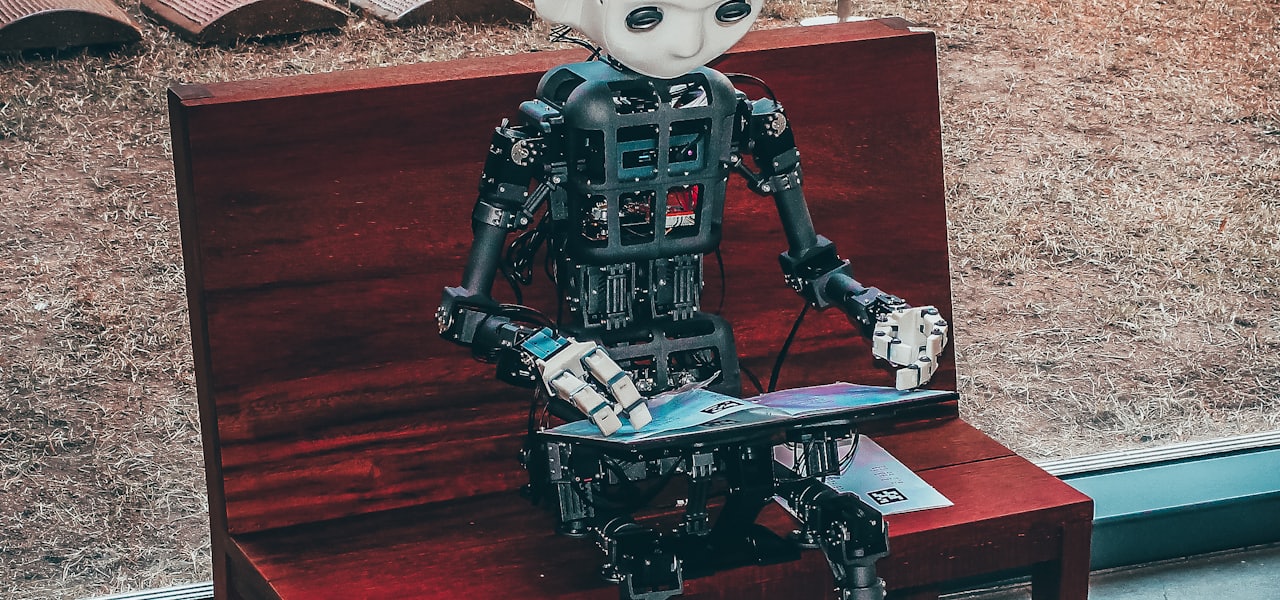
    Neuromorphic computing is a computing approach inspired by the human brain's structure and function. It uses artificial neurons to perform computations, mimicking neural systems for tasks such as perception, motor control, and multisensory integration. These systems, implemented in analog, digital, or mixed-mode VLSI, prioritize robustness, adaptability, and learning by emulating the brain’s distributed processing across small computing elements. This interdisciplinary field integrates biology, physics, mathematics, computer science, and electronic engineering to develop systems that emulate the brain’s morphology and computational strategies. Neuromorphic systems aim to enhance energy efficiency and computational power for applications including artificial intelligence, pattern recognition, and sensory processing. == History == Carver Mead proposed one of the first applications for neuromorphic engineering in the late 1980s. In 2006, researchers at Georgia Tech developed a field programmable neural array, a silicon-based chip modeling neuron channel-ion characteristics. In 2011, MIT researchers created a chip mimicking synaptic communication using 400 transistors and standard CMOS techniques. In 2012 HP Labs researchers reported that Mott memristors exhibit volatile behavior at low temperatures, enabling the creation of neuristors that mimic neuron behavior and support Turing machine components. Also in 2012, Purdue University researchers presented a neuromorphic chip design using lateral spin valves and memristors, noted for energy efficiency. The 2013 Blue Brain Project creates detailed digital models of rodent brains. Neurogrid, developed by Brains in Silicon at Stanford University, used 16 NeuroCore chips to emulate 65,536 neurons with high energy efficiency in 2014. The 2014 BRAIN Initiative and IBM’s TrueNorth chip contributed to neuromorphic advancements. The 2016 BrainScaleS project, a hybrid neuromorphic supercomputer at University of Heidelberg, operated 864 times faster than biological neurons. In 2017, Intel unveiled its Loihi chip, using an asynchronous artificial neural network for efficient learning and inference. Also in 2017 IMEC’s self-learning chip, based on OxRAM, demonstrated music composition by learning from minuets. In 2022, MIT researchers developed artificial synapses using protons for analog deep learning. In 2019, the European Union funded neuromorphic quantum computing to explore quantum operations using neuromorphic systems. Also in 2022, researchers at the Max Planck Institute for Polymer Research developed an organic artificial spiking neuron for in-situ neuromorphic sensing and biointerfacing. Researchers reported in 2024 that chemical systems in liquid solutions can detect sound at various wavelengths, offering potential for neuromorphic applications. == Neurological inspiration == Neuromorphic engineering emulates the brain’s structure and operations, focusing on the analog nature of biological computation and the role of neurons in cognition. The brain processes information via neurons using chemical signals, abstracted into mathematical functions. Neuromorphic systems distribute computation across small elements, similar to neurons, using methods guided by anatomical and functional neural maps from electron microscopy and neural connection studies. == Implementation == Neuromorphic systems employ hardware such as oxide-based memristors, spintronic memories, threshold switches, and transistors. Software implementations train spiking neural networks using error backpropagation. === Neuromemristive systems === Neuromemristive systems use memristors to implement neuroplasticity, focusing on abstract neural network models rather than detailed biological mimicry. These systems enable applications in speech recognition, face recognition, and object recognition, and can replace conventional digital logic gates. The Caravelli-Traversa-Di Ventra equation describes memristive memory evolution, revealing tunneling phenomena and Lyapunov functions. === Neuromorphic sensors === Neuromorphic principles extend to sensors, such as the retinomorphic sensor or event camera, which mimic human vision by registering brightness changes individually, optimizing power consumption. An example of this applied to detecting light is the retinomorphic sensor or, when employed in an array, an event camera. == Ethical considerations == Neuromorphic systems raise the same ethical questions as those for other approaches to artificial intelligence. Daniel Lim argued that advanced neuromorphic systems could lead to machine consciousness, raising concerns about whether civil rights and other protocols should be extended to them. Legal debates, such as in Acohs Pty Ltd v. Ucorp Pty Ltd, question ownership of work produced by neuromorphic systems, as non-human-generated outputs may not be copyrightable.

    Read more →
  • Semantic triple

    Semantic triple

    A semantic triple, or RDF triple or simply triple, is the atomic data entity in the Resource Description Framework (RDF) data model. As its name indicates, a triple is a sequence of three entities that codifies a statement about semantic data in the form of subject–predicate–object expressions (e.g., "Bob is 35", or "Bob knows John"). == Subject, predicate and object == This format enables knowledge to be represented in a machine-readable way. Particularly, every part of an RDF triple is individually addressable via unique URIs—for example, the statement "Bob knows John" might be represented in RDF as: http://example.name#BobSmith12 http://xmlns.com/foaf/spec/#term_knows http://example.name#JohnDoe34. Given this precise representation, semantic data can be unambiguously queried and reasoned about. The components of a triple, such as the statement "The sky has the color blue", consist of a subject ("the sky"), a predicate ("has the color"), and an object ("blue"). This is similar to the classical notation of an entity–attribute–value model within object-oriented design, where this example would be expressed as an entity (sky), an attribute (color) and a value (blue). From this basic structure, triples can be composed into more complex models, by using triples as objects or subjects of other triples—for example, Mike → said → (triples → can be → objects). Given their particular, consistent structure, a collection of triples is often stored in purpose-built databases called triplestores. == Difference from relational databases == A relational database is the classical form for information storage, working with different tables, which consist of rows. The query language SQL is able to retrieve information from such a database. In contrast, RDF triple storage works with logical predicates. No tables nor rows are needed, but the information is stored in a text file. An RDF-triple store can be converted into an SQL database and the other way around. If the knowledge is highly unstructured and dedicated tables aren't flexible enough, semantic triples are used over classic relational storage. In contrast to a traditional SQL database, an RDF triple store isn't created with a table editor. The preferred tool is a knowledge editor, for example Protégé. Protégé looks similar to an object-oriented modeling application used for software engineering, but it's focused on natural language information. The RDF triples are aggregated into a knowledge base, which allows external parsers to run requests. Possible applications include the creation of non-player characters within video games. == Limitations == One concern about triple storage is its lack of database scalability. This problem is especially pertinent if millions of triples are stored and retrieved in a database. The seek time is larger than for classical SQL-based databases. A more complex issue is a knowledge model's inability to predict future states. Even if all the domain knowledge is available as logical predicates, the model fails in answering what-if questions. For example, suppose in the RDF format a room with a robot and table is described. The robot knows what the location of the table is, is aware of the distance to the table and knows also that a table is a type of furniture. Before the robot can plan its next action, it needs temporal reasoning capabilities. Thus, the knowledge model should answer hypothetical questions in advance before an action is taken.

    Read more →
  • Tuber (app)

    Tuber (app)

    Tuber (Chinese: Tuber浏览器) was a web browser mobile app developed by Shanghai Fengxuan Information Technology that allowed users within mainland China to view filtered versions of certain websites normally blocked by the Great Firewall. Filtered versions of websites such as Google, Facebook, Instagram, YouTube, Twitter, Netflix, IMDb, and Wikipedia could be viewed. The app was backed by cybersecurity company Qihoo 360 which served as the parent company. The app required phone number registration. Sensitive keywords were blocked by the app. On October 9, 2020, Global Times editor Rita Bai Yunyi tweeted that the move represented "a great step for China's opening up". The app was removed from China domestic app stores and operations ceased as of October 10, 2020. On October 12, when questioned by a Bloomberg News reporter on the topic, Foreign Ministry spokesperson Zhao Lijian replied, "This is not a diplomatic issue, and I do not have the relevant information you mentioned. China has always managed the Internet in accordance with the law. I suggest you ask the competent department for the specific situation."

    Read more →
  • Strategic Computing Initiative

    Strategic Computing Initiative

    The United States government's Strategic Computing Initiative funded research into advanced computer hardware and artificial intelligence from 1983 to 1993. The initiative was designed to support various projects that were required to develop machine intelligence in a prescribed ten-year time frame, from chip design and manufacture, computer architecture to artificial intelligence software. The Department of Defense spent a total of $1 billion on the project. The inspiration for the program was Japan's fifth generation computer project, an enormous initiative that set aside billions for research into computing and artificial intelligence. As with Sputnik in 1957, the American government saw the Japanese project as a challenge to its technological dominance. The British government also funded a program of their own around the same time, known as Alvey, and a consortium of U.S. companies funded another similar project, the Microelectronics and Computer Technology Corporation. The goal of SCI, and other contemporary projects, was nothing less than full machine intelligence. "The machine envisioned by SC", according to Alex Roland and Philip Shiman, "would run ten billion instructions per second to see, hear, speak, and think like a human. The degree of integration required would rival that achieved by the human brain, the most complex instrument known to man." The initiative was conceived as an integrated program, similar to the Apollo moon program, where different subsystems would be created by various companies and academic projects and eventually brought together into a single integrated system. Roland and Shiman wrote that "While most research programs entail tactics or strategy, SC boasted grand strategy, a master plan for an entire campaign." The project was funded by the Defense Advanced Research Projects Agency and directed by the Information Processing Technology Office (IPTO). By 1985 it had spent $100 million, and 92 projects were underway at 60 institutions: half in industry, half in universities and government labs. Robert Kahn, who directed IPTO in those years, provided the project with its early leadership and inspiration. Clint Kelly managed the SC Initiative for three years and developed many of the specific application programs for DARPA, such as the Autonomous Land Vehicle. By the late 1980s, it was clear that the project would fall short of realizing the hoped-for levels of machine intelligence. Program insiders pointed to issues with integration, organization, and communication. When Jack Schwarz ascended to the leadership of IPTO in 1987, he cut funding to artificial intelligence research (the software component) "deeply and brutally", "eviscerating" the program (wrote Pamela McCorduck). Schwarz felt that DARPA should focus its funding only on those technologies which showed the most promise. In his words, DARPA should "surf", rather than "dog paddle", and he felt strongly AI was not "the next wave". The project was superseded in the 1990s by the Accelerated Strategic Computing Initiative and then by the Advanced Simulation and Computing Program. These later programs did not include artificial general intelligence as a goal, but instead focused on supercomputing for large scale simulation, such as atomic bomb simulations. The Strategic Computing Initiative of the 1980s is distinct from the 2015 National Strategic Computing Initiative—the two are unrelated. == Results == Although the program failed to meet its goal of high-level machine intelligence, it did meet some of its specific technical objectives, for example those of autonomous land navigation. The Autonomous Land Vehicle program and its sister Navlab project at Carnegie Mellon University, in particular, laid the scientific and technical foundation for many of the driverless vehicle programs that came after it, such as the Demo II and III programs (ALV being Demo I), Perceptor, and the DARPA Grand Challenge. The use of video cameras plus laser scanners and inertial navigation units pioneered by the SCI ALV program form the basis of almost all commercial driverless car developments today. It also helped to advance the state of the art of computer hardware to a considerable degree. On the software side, the initiative funded development of the Dynamic Analysis and Replanning Tool (DART), a program that handled logistics using artificial intelligence techniques. This was a huge success, saving the Department of Defense billions during Desert Storm. Introduced in 1991, DART had by 1995 offset the monetary equivalent of all funds DARPA had channeled into AI research for the previous 30 years combined.

    Read more →
  • ITools Resourceome

    ITools Resourceome

    iTools is a distributed infrastructure for managing, discovery, comparison and integration of computational biology resources. iTools employs Biositemap technology to retrieve and service meta-data about diverse bioinformatics data services, tools, and web-services. iTools is developed by the National Centers for Biomedical Computing as part of the NIH Road Map Initiative.

    Read more →