Arattai Messenger (or simply Arattai) is an encrypted messaging service for instant messaging, voice calls, and video calls, developed by Zoho Corporation. The name Arattai means "chat" or "conversation" in Tamil. The app was soft-launched in January 2021. The app saw a sharp surge in downloads in September 2025, partially fueled by endorsements from Indian government officials. However, the app dropped from the top rankings in October 2025. == History == Arattai was initially tested internally among Zoho employees before being released publicly in early 2021. The launch coincided with a surge in interest for privacy-focused and messaging services, triggered by concerns over WhatsApp's updated terms of service. In September 2025, Arattai experienced a major surge in adoption, with daily sign-ups reportedly increasing 100-fold, from around 3,000 to more than 350,000 in three days. The surge in downloads was attributed to Zoho products being promoted by Indian government officials as part of their Make in India push for homegrown alternatives to foreign‐owned apps, amid deteriorating India–US relations. The growth temporarily strained Zoho's infrastructure, prompting rapid scaling of servers and capacity expansion. During the same period, the app reached the top position in Apple's App Store charts for the "Social Networking" category in India. The app dropped from the top ranking in late October 2025. == Reception == At launch, Arattai was positioned as a potential domestic rival to WhatsApp in India, but analysts noted that it faced challenges with encryption, ecosystem, and network effect. Critics pointed to occasional sync delays.
Alipay
Alipay (simplified Chinese: 支付宝; traditional Chinese: 支付寶; pinyin: zhīfùbǎo) is a third-party mobile and online payment platform, established in Hangzhou, China, in February 2004 by Alibaba Group and its founder Jack Ma. In 2015, Alipay moved its headquarters to Pudong, Shanghai, although its parent company Ant Financial remains Hangzhou-based. Alipay overtook PayPal as the world's largest mobile (digital) payment platform in 2013. As of June 2020, Alipay serves over 1.3 billion users and 80 million merchants. According to the statistics of the fourth quarter of 2018, Alipay has a 55.32% share of the third-party payment market in mainland China, and it continues to grow. Along with WeChat, Alipay has been described to be China's super-app with a wide range of functionalities including ridesharing, travel booking and medical appointments. == History == The service was first launched in 2003, by Taobao. The People's Bank of China, China's central bank, issued licensing regulations in June 2010 for third-party payment providers. It also issued separate guidelines for foreign-funded payment institutions. Because of this, Alipay, which accounted for half of China's non-bank online payment market, was restructured as a domestic company controlled by Alibaba CEO Jack Ma in order to facilitate the regulatory approval for the license. The 2010 transfer of Alipay's ownership was controversial, with media reports in 2011 that Yahoo! and Softbank (Alibaba Group's controlling shareholders) were not informed of the sale for nominal value. Chinese business publication Century Weekly criticised Ma, who stated that Alibaba Group's board of directors was aware of the transaction. The incident was criticised in foreign and Chinese media as harming foreign trust in making Chinese investments. The ownership dispute was resolved by Alibaba Group, Yahoo!, and Softbank in July 2011. In 2013, Alipay launched a financial product platform called Yu'e Bao. Alipay partnered with Tianhong Asset Management to launch the it. Yu'e Bao offers an online money market account in which Alipay customers can deposit money and receive a higher interest rate than that available from banks. It soon became China's largest online money market fund and prompted competitors like Baidu and Tencent to introduce alternatives. Alibaba (the parent company of Alipay) reported having 152 million Yu'e Bao users in mid-2016, with 810 billion RMB (US$117 billion) in funds under management. In 2015, Alipay's parent company was re-branded as Ant Financial Services Group. In 2017, Alipay unveiled their facial recognition payment service. In 2020, Alipay upgraded from a payment financial instrument to an open platform for digital life. In 2021, the mandate by the Ministry of Industry and Information Technology (MIIT) to open up the "walled garden" ecosystems of the major tech companies has led to the introduction of interoperability of payment QR codes of Alipay and competing WeChat Pay and UnionPay's Cloud QuickPass platforms. In response to the increase in Alipay's payment volume due to use on Alibaba's e-commerce sites and others, Chinese regulators introduced new rules in 2020. The new rules focused on Alipay because the payment volume exploded due to its use on Alibaba's e-commerce sites and other platforms. By the second quarter in 2020, Alipay held 55.6% of China's third party mobile payment market. The People's Bank of China made rules that required payment firms to place money with regulators and anti-monopoly reviews would be triggered if the amount exceeded 50% market share. The rules included that the People's Bank of China mandate an online-payment clearing route through the NetsUnion Clearing Corporation, a centralized, state-overseen clearing body, and that unused consumer funds be held by a third-party payment provider in a non-interest-bearing account. These measures increased transparency and reduced systemic risk. When Alipay operates outside of China, it must comply with local financial regulations, which may treat specific functions such as money-market funds or investment-linked products. In Singapore, such services may require prior authorization from securities or financial-services regulators before they can be offered to residents. == Services == Alipay states that it operates with more than 65 financial institutions including Visa and MasterCard to provide payment services for Taobao and Tmall as well as more than 460,000 online and local Chinese businesses. Alipay is used in smartphones with their Alipay Wallet app. QR code payment codes are used for local in-store payments. The Alipay app also provides features such as credit card bill payments, bank account managements, P2P transfer, prepay mobile phone top-up, bus and train ticket purchases, food orders, vehicles for hire, insurance selections and a digital identification document storage. Alipay also allows online check-out on most Chinese-based websites such as Taobao and Tmall. The Alipay app allows users to add their own services provided from different companies to create a more personalised experience. Since late 2008, Alipay has promoted public service payment services and has covered more than 300 cities nationwide, supporting more than 1,200 partner organizations. In addition to utility bills such as water and electricity, Alipay also extends their services to areas such as paying transportation fines, property fees, and cable television fees. Common online payment services also include hydropower coal payment, tuition payment and traffic fine. On 15 January 2009, Alipay launched a credit card repayment service, supporting 39 domestic bank-issued credit cards. It is currently the most popular third-party repayment platform. The main advantages are free credit card bills checking, repayments with no administrative fee, as well as automatic repayment, repayment reminders and other value-added services. In the first quarter of 2014, 76% of credit cards were also paid by Alipay Wallet. From December 2013, several chain convenience store companies, including Meiyijia, Hongqi Chain, and Qishiduo C-STORE and 7-Eleven, have successively supported Alipay payment; in December, Beijing taxi drivers began to accept Alipay to pay the fare. Subsequently, Wanda Cinema, Joy City, Wangfujing and other large-scale retail companies as well as movie theaters, KTV, and catering companies have access to Alipay. From 26 March 2019, the service fee will be charged for the payment of credit card through Alipay. Customers only pay the portion of the payment that exceeds 2,000 yuan at 0.1%. In addition to this, in 2019, Walgreens accepted Alipay as payment in 3,000 US stores. Walgreen's products are available to Chinese customers through Alibaba's Tmall online marketplace. The payment application can also be used on Alibaba.com's site and Taobao as a means of payment. A Nielsen report suggests that over 90% of Chinese tourists would be willing to use mobile payment overseas if given the option. Many Chinese tourists do not have international credit cards, and so Alipay is a payment option. Digital payments have become the norm in China as the government pushes a cashless system even in rural and village areas. In November 2019, Alipay introduced Tourpass, a service component that allows non-Chinese users to use its mobile payment feature by pre-loading Chinese Yuan equivalent foreign currency into the app. In 2020, Alipay used a QR code system to help in containing the COVID-19 outbreak. The health code system tags users one of three colors according to their location, basic health information and travel history. "Beauty filters" were included to Alipay's face-scan payment system in a new upgrade that was released in July 2019. The market has responded well to the "beauty filters," which make users seem better when they use the program to make payments. Alipay Tap is a payment function launched by Alipay in July 2024. Alipay+ NFC enables wallets to offer tap-to-pay acceptance across Mastercard's global contactless network, all within your existing wallet infrastructure. == Foreign expansion == Outside of China, more than 300 worldwide merchants use Alipay to sell directly to consumers in China. It currently supports transactions in 18 foreign currencies. Since the launch of Alipay in the Mainland China, Ant Financial introduced a series of expansion of the services to other countries. Other than expanding into individual countries, the system would also be integrated with online payment platform providers. Ant Group had acquired a majority stake into 2C2P, a Singapore-based provider used by merchants worldwide in April 2022, and would eventually integrate Alipay with 2C2P. === Asia === ==== Bangladesh ==== In 2018, Alipay bought 20% shares in Bangladeshi mobile financial service provider bKash Limited. ==== Hong Kong ==== In 2017, Ant Financial expanded to Hong Kong. In a joint venture with CK Hutchison, as Alipay Payment Ser
Mars Plus
Mars Plus is a 1994 science fiction novel by American writer Frederik Pohl and Thomas T. Thomas. It is the sequel to Pohl's 1976 novel Man Plus, which is about a cyborg, Roger Torraway, who is designed to operate in the harsh Martian environment, so that humans can start to colonize Mars. Mars Plus is set fifty years after the first novel. Young Demeter Coghlan travels to Mars, now settled by humans and cyborgs, and finds herself amidst a rebellion by the colonists. == Plot == In Man Plus, set in the not-too-distant future, with threat of the Cold War becoming a fighting war, people plan for the colonization of Mars to escape the seemingly-inevitable Armageddon. The American government begins a cyborg program to create a being capable of surviving the harsh Martian environment: a "Man Plus" called Roger Torraway who is converted from man to cyborg. While his cyborg body is adapted to Mars, he feels strange at first. As more nations develop cyborgs, the computer networks of Earth become sentient. Mars Plus is set fifty years after the first novel, when Mars is settled by humans and cyborgs. The cyborg Torroway is in the novel, but he is not the main character. The protagonist is Demeter Coghlan, a young woman from Earth who travels to Mars. Demeter is seeking information about a canyon that she believes may be significant if the colonists begin to convert Mars to an Earth-like planet. Amidst a backdrop of spies and newly dispatched Earth diplomats, the inexperienced Demeter senses that tensions are rising on the planet. She is further disoriented due to recovering from an accident. Despite the risks in the region, Demeter has intense sexual encounters with some of the local colonists. When the locals rebel against the surveillance set up by the computer network, Demeter is kidnapped by the computer network. == Reception == The reviewer from SFBook Reviews criticizes the book, saying "nothing really happens" and stating that there is no linkage to Man Plus apart from the presence of the cyborg Torraway; moreover, the reviewer states that the questions posed in the first novel are not answered. SF Reviews calls Mars Plus "...not as good as Man Plus but...not bad", and it is praised for "...some nice touches: Demeter continuously forgetting to think about geology; her careless dictation to the computer and her irresistible urges for wild sex." SF Reviews criticizes the writing in Mars Plus for being "...a little careless in places" and in need of more "...more crafting and pruning."
Netflix Prize
The Netflix Prize was an open competition for the best collaborative filtering algorithm to predict user ratings for films, based on previous ratings without any other information about the users or films, i.e. without the users being identified except by numbers assigned for the contest. The competition was held by Netflix, a video streaming service, and was open to anyone who was neither connected with Netflix (current and former employees, agents, close relatives of Netflix employees, etc.) nor a resident of certain blocked countries (such as Cuba or North Korea). On September 21, 2009, the grand prize of US$1,000,000 was given to the BellKor's Pragmatic Chaos team which bested Netflix's own algorithm for predicting ratings by 10.06%. == Problem and data sets == Netflix provided a training data set of 100,480,507 ratings that 480,189 users gave to 17,770 movies. Each training rating is a quadruplet of the form
Predicate (logic)
In logic, a predicate is a non-logical symbol that represents a property or a relation, though, formally, does not need to represent anything at all. For instance, in the first-order formula P ( a ) {\displaystyle P(a)} , the symbol P {\displaystyle P} is a predicate that applies to the individual constant a {\displaystyle a} which evaluates to either true or false. Similarly, in the formula R ( a , b ) {\displaystyle R(a,b)} , the symbol R {\displaystyle R} is a predicate that applies to the individual constants a {\displaystyle a} and b {\displaystyle b} . Predicates are considered a primitive notion of first-order, and higher-order logic and are therefore not defined in terms of other more basic concepts. The term derives from the grammatical term "predicate", meaning a word or phrase that represents a property or relation. In the semantics of logic, predicates are interpreted as relations. For instance, in a standard semantics for first-order logic, the formula R ( a , b ) {\displaystyle R(a,b)} would be true on an interpretation if the entities denoted by a {\displaystyle a} and b {\displaystyle b} stand in the relation denoted by R {\displaystyle R} . Since predicates are non-logical symbols, they can denote different relations depending on the interpretation given to them. While first-order logic only includes predicates that apply to individual objects, other logics may allow predicates that apply to collections of objects defined by other predicates. Strictly speaking, a predicate does not need to be given any interpretation, so long as its syntactic properties are well-defined. For example, equality may be understood solely through its reflexive and substitution properties (cf. Equality (mathematics) § Axioms). Other properties can be derived from these, and they are sufficient for proving theorems in mathematics. Similarly, set membership can be understood solely through the axioms of Zermelo–Fraenkel set theory. == Predicates in different systems == A predicate is a statement or mathematical assertion that contains variables, sometimes referred to as predicate variables, and may be true or false depending on those variables’ value or values. In propositional logic, atomic formulas are sometimes regarded as zero-place predicates. In a sense, these are nullary (i.e. 0-arity) predicates. In first-order logic, a predicate is a non-logical relation symbol, which forms an atomic formula when applied to an appropriate number of terms. In set theory with the law of excluded middle, predicates are understood to be characteristic functions or set indicator functions (i.e., functions from a set element to a truth value). Set-builder notation makes use of predicates to define sets. In autoepistemic logic, which rejects the law of excluded middle, predicates may be true, false, or simply unknown. In particular, a given collection of facts may be insufficient to determine the truth or falsehood of a predicate. In fuzzy logic, the strict true/false valuation of the predicate is replaced by a quantity interpreted as the degree of truth.
Non-human
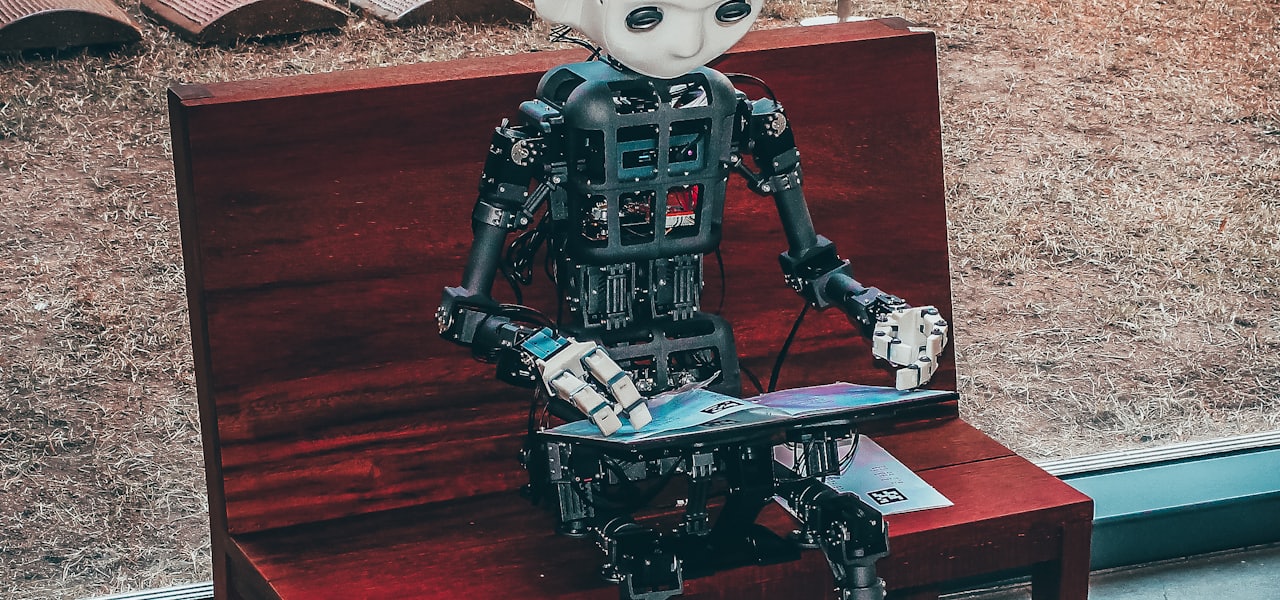
Non-human (also spelled nonhuman) is any entity displaying some, but not enough, human characteristics to be considered a human. The term has been used in a variety of contexts and may refer to objects that have been developed with human intelligence, such as robots or vehicles. == Organisms == === Animal rights and personhood === In the animal rights movement, it is common to distinguish between "human animals" and "non-human animals". Participants in the animal rights movement generally recognize that non-human animals have some similar characteristics to those of human persons. For example, various non-human animals have been shown to register pain, compassion, memory, and some cognitive function. Some animal rights activists argue that the similarities between human and non-human animals justify giving non-human animals rights that human society has afforded to humans, such as the right to self-preservation, and some even wish for all non-human animals or at least those that bear a fully thinking and conscious mind, such as vertebrates and some invertebrates such as cephalopods, to be given a full right of personhood. === The non-human in philosophy === Contemporary philosophers have drawn on the work of Henri Bergson, Gilles Deleuze, Félix Guattari, and Claude Lévi-Strauss (among others) to suggest that the non-human poses epistemological and ontological problems for humanist and post-humanist ethics, and have linked the study of non-humans to materialist and ethological approaches to the study of society and culture. == Software and robots == The term non-human has been used to describe computer programs and robot-like devices that display some human-like characteristics. In both science fiction and in the real world, computer programs and robots have been built to perform tasks that require human-computer interactions in a manner that suggests sentience and compassion. There is increasing interest in the use of robots in nursing homes and to provide elder care. Computer programs have been used for years in schools to provide one-on-one education with children. The Tamagotchi toy required children to provide care, attention, and nourishment to keep it "alive".
Whisper (speech recognition system)
Whisper is a machine learning model for speech recognition and transcription, created by OpenAI and first released as open-source software in September 2022. It is capable of transcribing speech in English and multiple other languages, and can translate several non-English languages into English. Whisper is a weakly-supervised deep learning acoustic model, made using an encoder-decoder transformer architecture. OpenAI claims that the combination of different training data and post-training filtering used in its development has led to improved recognition of accents, background noise, and jargon compared to previous approaches. While the model does not outperform larger, more specialized models and still experiences AI hallucination, it has been showed to be useful for general sound recognition and has many applications across different industries. == Background == Speech recognition has had a long history in research; the first approaches made use of statistical methods, such as dynamic time warping, and later hidden Markov models. At around the 2010s, deep neural network approaches became more common for speech recognition models, which were enabled by the availability of large datasets ("big data") and increased computational performance. Early approaches to deep learning in speech recognition included convolutional neural networks, which were limited due to their inability to capture sequential data, which later led to developments of Seq2seq approaches, which include recurrent neural networks, which made use of long short-term memory. Transformers, introduced in 2017 by Google, displaced many prior state-of-the-art approaches across a wide range in machine learning, and started becoming the core neural architecture in fields such as language modeling and computer vision. Weakly-supervised approaches to training acoustic models were recognized in the early 2020s as promising for speech recognition approaches using deep neural networks. According to a NYT report, in 2021 OpenAI believed they exhausted sources of higher-quality data to train their large language models and decided to complement scraped web text with transcriptions of YouTube videos and podcasts, and developed Whisper to solve this task. Whisper Large V2 was released on December 8, 2022, followed by Whisper Large V3 being released in November 2023, during the OpenAI Dev Day. In March 2025, OpenAI released new transcription models based on GPT-4o and GPT-4o mini, both of which have lower error rates than Whisper. == Architecture == The Whisper architecture is based on an encoder-decoder transformer. Input audio is resampled to 16,000 Hertz (Hz) and converted to an 80-channel Log-magnitude Mel spectrogram using 25 ms windows with a 10 ms stride. The spectrogram is then normalized to a [-1, 1] range with near-zero mean. The encoder takes this Mel spectrogram as input and processes it. It first passes through two convolutional layers. Sinusoidal positional embeddings are added. It is then processed by a series of Transformer encoder blocks (with pre-activation residual connections). The encoder's output is layer normalized. The decoder is a standard transformer decoder. It has the same width and Transformer blocks as the encoder. It uses learned positional embeddings and tied input-output token representations (using the same weight matrix for both the input and output embeddings). It uses a byte-pair encoding tokenizer, of the same kind as used in GPT-2. English-only models use the GPT-2 vocabulary, while multilingual models employ a re-trained multilingual vocabulary with the same number of words. Special tokens are used to allow the decoder to perform multiple tasks: Tokens that denote language (one unique token per language). Tokens that specify task (<|transcribe|> or <|translate|>). Tokens that specify if no timestamps are present (<|notimestamps|>). If the token is not present, then the decoder predicts timestamps relative to the segment, and quantized to 20 ms intervals. <|nospeech|> for voice activity detection. <|startoftranscript|>, and <|endoftranscript|> . Any text that appears before <|startoftranscript|> is not generated by the decoder, but given to the decoder as context. Loss is only computed over non-contextual parts of the sequence, i.e. tokens between these two special tokens. == Training data == The training dataset consists of 680,000 hours of labeled audio-transcript pairs sourced from the internet using semi-supervised learning. This includes 117,000 hours in 96 non-English languages and 125,000 hours of X→English translation data, where X stands for any non-English language. Preprocessing involved standardization of transcripts, filtering to remove machine-generated transcripts using heuristics (e.g., punctuation, capitalization), language identification and matching with transcripts, fuzzy deduplication, and deduplication with evaluation datasets to avoid data contamination. Speechless segments were also included to allow voice activity detection training. For the files still remaining after the filtering process, audio files were then broken into 30-second segments paired with the subset of the transcript that occurs within that time. If this predicted spoken language differed from the language of the text transcript associated with the audio, that audio-transcript pair was not used for training the speech recognition models, but instead for training translation. The model was trained using the AdamW optimizer with gradient norm clipping and a linear learning rate decay with warmup, with batch size 256 segments. Training proceeded for 1 million updates (approximately 2-3 epochs). No data augmentation or regularization, except for the Large V2 model, which used SpecAugment, Stochastic Depth, and BPE Dropout. The training used data parallelism with float16, dynamic loss scaling, and activation checkpointing. === Post-training filtering === After training the first model, researchers ran it on different subsets of the training data, each representing a distinct source. Data sources were ranked by a combination of their error rate and size. Manual inspection of the top-ranked sources (high error, large size) helped determine if the source was low quality (e.g., partial transcriptions, inaccurate alignment). After training, it was fine-tuned to suppress the prediction of speaker names and low-quality sources were then removed. == Capacity == While Whisper does not outperform models which specialize in the LibriSpeech dataset, when tested across many datasets, it is more robust and makes 55.2% fewer errors than other models. Whisper has a differing error rate with respect to transcribing different languages, with a higher word error rate in languages not well-represented in the training data. The authors found that multi-task learning improved overall performance compared to models specialized to one task. They conjectured that the best Whisper model trained is still underfitting the dataset, and larger models and longer training can result in better models. Third-party evaluations have found varying levels of AI hallucination. A study of transcripts of public meetings found hallucinations in eight out of every 10 transcripts, while an engineer discovered hallucinations in "about half" of 100 hours of transcriptions and a developer identified them in "nearly every one" of 26,000 transcripts. A study of 13,140 short audio segments (averaging 10 seconds) found 187 hallucinations (1.4%), 38% of which generated text that could be harmful because it inserted false references to things like race, non-existent medications, or violent events that were not in the audio. == Applications == The model has been used as the base for many applications, such as a unified model for speech recognition and more general sound recognition. Whisper has also been integrated into the workflow of biomedical research. In 2025, a study on Alzheimer's disease detection used the model to transcribe spontaneous speech recordings. The transcripts that were generated by the model were combined with LLM vector embeddings and traditional classifiers to help classify the patients' health. Another application is when OVALYTICS incorporated Whisper to transcribe YouTube videos and automate content moderation systems, which improved its detection of offensive content. The model has also been used in academic libraries and cultral heritage institutions to generate transcripts and captions for their digitized audiovisual collections. In a 2025 case study, Emory University Libraries found that Whisper reduced the labor used in transcription by around 30-35%, shifting work from text creation to text correction. However, human review is still necessary to make sure accuracy, formatting, and accessibility are all standard.